Understanding Zakat: Scholarly Foundations & Advanced Rulings
The Mithqal Debate: Why 85g vs 87.48g?
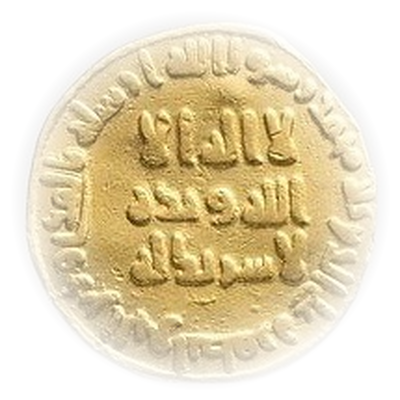
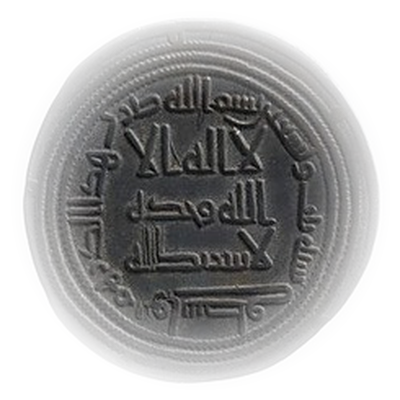
The primary texts establish the foundational obligations: gold Nisab at 20 Dinars, silver Nisab at 200 Dirhams, the 2.50% Zakat rate, and the one-year holding condition (Hawl).
Converting dinars/dirhams into modern grams is a post-Prophetic metrology question resolved through historical numismatics, not a direct Qur'an or hadith gram-value statement.
The ~85g standard (commonly used)
A widely used operational conversion sets one Dinar (Mithqal) at approximately 4.25g. That yields the familiar contemporary threshold of 85g for gold Nisab.
20 Dinars × 4.25 g/Dinar = 85 gramsMany modern institutions adopt this as a practical baseline, including standards often labeled as AAOIFI/NZF in calculator settings.
The ~87.48g standard (precautionary)
Some guides use a slightly heavier metrology assumption for the Dinar, producing an alternate Nisab near 87.48g.
20 Dinars × 4.374 g/Dinar ≈ 87.48 gramsThis is typically presented as a precautionary policy choice, not a separate primary-text Nisab amount.
Silver Nisab derivation
Silver Nisab is classically 200 Dirhams. A common historical convention relates Dinar and Dirham weights at roughly 7:10, leading to the familiar modern silver Nisab conversions.
Weight of 10 Dirhams = 7 × 4.25g = 29.75gWeight of 1 Dirham = 2.975gNisab: 200 × 2.975g = 595 gramsUsing the heavier Mithqal convention yields approximately 612.36g.
| Standard | Gold Nisab | Silver Nisab | Adopters |
|---|---|---|---|
| AAOIFI / NZF | 85 g | 595 g | NZF (UK/Canada), AAOIFI, Joe Bradford, Diyanet |
| Precautionary | 87.48 g | 612.36 g | Islamic Relief, SAPA USA, South Asian Hanafis |
Gold vs Silver: Which Standard to Use?
Classical dual-metal thresholds and modern purchasing-power divergence
Both gold and silver Nisab are established in the Sunnah (20 Dinars / 200 Dirhams). In modern fiat terms, however, those thresholds produce very different currency values.
Live reference values last updated: Unavailable
Choosing gold or silver as your operational basis is therefore a juristic and policy choice in contemporary settings, not a dispute over the underlying primary-text foundation.
The case for Silver (lower threshold)
- Maslahah (benefit): A lower threshold can expand payer eligibility, which may increase available Zakat funds.
- Ihtiyat (precaution): Some consider paying at a lower threshold safer than risking non-payment when potentially obligated.
This is a contemporary policy direction used by some organizations, not an exclusive text-only mandate for all contexts.
The case for Gold (higher threshold)
- Surplus wealth framing: The silver Nisab can be relatively low in some high-cost economies, so some scholars prefer gold to better reflect modern affluence.
- Economic calibration: Gold's market value may better approximate a meaningful wealth threshold in many contexts.
- Practical effect: This usually raises the threshold and can reduce burden on households with modest savings.
The Hawl: Understanding the Lunar Year
How schools handle Nisab continuity across the lunar year
The Hawl is a core condition for Zakat on monetary wealth: a lunar year passes while owning Nisab-level wealth. Schools differ on how intra-year fluctuations affect that condition.
Hanafi Hawl method
Under the Hanafi method, the start and end of the lunar year determine the assessment:
- If you possess Nisab at the start of the lunar year and at the end, Zakat is due on the total balance at the end.
- Fluctuations during the year (dips below Nisab) are ignored, provided wealth does not hit zero.
This powers the "Zakat Day" concept: pick your anniversary date, check your balance on that day, and if it exceeds Nisab, pay 2.50% on the whole amount.
The Shafi'i and Hanbali approach
These schools maintain a stricter requirement:
- Wealth must be held continuously above Nisab for the full year.
- If the balance dips below Nisab at any moment, the Hawl timer resets.
- Technically, money acquired mid-year (e.g., a bonus in month 6) starts its own separate Hawl.
Due to the complexity of tracking multiple Hawls, most digital platforms (and scholars) advise the Hanafi method or paying on the whole amount early (Ta'jeel, advance payment is permissible).
Advance payment (Ta'jil) before Hawl completion is also reported as permissible in hadith discussions, and is commonly used in modern practice.
Advanced Assets: Stocks, Retirement, Crypto
How scholars approach modern wealth categories
Stocks & Investments
The treatment depends on your intent: are you an active trader or a long-term investor?
Active Trader (full market value)
If you buy and sell stocks frequently for profit, shares are treated as Urudh al-Tijarah (trade goods):
Total Market Value × 2.50% = Zakat DueThe shares are inventory bought for profit, like merchandise on a shelf.
Long-term holdings (underlying assets or proxy)
For buy-and-hold investors, Zakat is due only on the liquid assets of the company, not fixed assets such as machinery and buildings. When balance-sheet analysis is impractical, some institutions publish a proxy:
Portfolio Value × chosen proxy × 2.50% = Zakat DueNZF recommends a 25% proxy when the underlying zakatable assets cannot be calculated. Other guidance uses different percentages. Treat the percentage as an attributed method, not a universal rule. See NZF: stocks and shares.
Mixed portfolio (trading + long-term)
Many people hold both short-term trades and long-term positions. Treat each bucket by intent: active trades at full market value, long-term holdings using your chosen proxy (for example 25% or 30%).
(Trading Value × 2.50%) + (Long-term Value × Proxy × 2.50%)Retirement Funds (401k, IRA, Pension)
Retirement funds have multiple contemporary methods because access, penalties, taxes, and asset composition can differ by account.
The "Accessible Balance" method (AMJA)
The Assembly of Muslim Jurists of America (AMJA) argues you don't fully "own" the portion locked behind taxes and penalties:
(Vested Balance − Penalty − Estimated Taxes) × 2.50%Example: $100k balance → ~$70k withdrawable → $1,750 Zakat
The "Invested Assets" method
Other scholars (Bradford, Zoya) argue the tax wrapper is irrelevant. Zakat is on the underlying asset type:
If invested in stocks: Balance × 30% × 2.50%Example: $100k balance → $30k zakatable → $750 Zakat
Rental Property & Rent Income
Scholars generally separate the underlying property from the cashflow generated by it.
Property held for rental (not resale)
- The building itself: not zakatable when kept as a productive asset.
- Saved rental income: zakatable if it remains in your balance on your Zakat day.
- Rent receivable: include overdue rent that is likely to be collected.
Property held for resale
If the property is inventory for sale, treat it like trade goods and assess market value.
Current market value × 2.50% = Zakat dueLoans Owed to You (Receivables)
Money you lent is still your wealth, but treatment depends on collection confidence.
Practical treatment
- Likely recoverable loans: include in your zakatable total each year.
- Uncertain/delayed loans: many scholars allow waiting until recovered, then paying one year (or according to your local fatwa).
Recoverable amount × 2.50% = Zakat dueCryptocurrencies
Contemporary scholars and councils discuss crypto treatment by asset type (payment-token, asset-backed, security-like), with many treating major payment tokens as zakatable wealth.
Treatment
- Common operational method: for currency-like holdings, many guides use current market value × 2.50%.
- Staking and locked assets: treatment depends on ownership, access, and the asset type. Use guidance that addresses the specific arrangement.
- Valuation: Use the spot price on your Zakat due date.
Business Assets
Operational business Zakat guidance emphasizes valuation date discipline and asset categories.
Valuation rules
- Inventory: Valued at current selling price (not cost), per the majority of classical jurists. Zakat is on potential wealth.
- Raw materials: Current replacement cost (market value to buy today).
- Work-in-progress: Cost of materials + labor accumulated.
- Fixed assets: Machinery, computers, buildings are not zakatable (0%).
Sources & Further Reading
Primary texts, fiqh standards, and metrology references